The Giens peninsula is a rocky outcrop connected to the mainland by a double tombolo, a rare geological formation in Europe. This double sandy cordon, which encloses the former salt marshes of Pesquiers, shapes both the landscape and the activities that can be practiced on site. Understanding this particular geography allows for better choices in itineraries and points of interest.
Regulations for sliding sports at Almanarre: what changes in practice
Almanarre beach, located on the western tombolo, is one of the most renowned kitesurfing spots in the Mediterranean. The practice is regulated by a municipal decree and a prefectural decree that prohibit navigation in the 300-meter band, except in two specific channels (Almanarre and Mérou).
In summer, the coexistence of bathers, kitesurfers, and windsurfers requires strict spatial organization. The launching zones are marked, and time slots may vary depending on wind conditions. Before renting equipment or setting out, checking the information panels on site can help avoid fines or conflicts of use.
For those looking for what to do on the Giens peninsula beyond the usual beaches, regulated kitesurfing at Almanarre represents a full-fledged activity, provided that this regulatory framework is respected.
Giens coastal path: routes, difficulty, and sections to prioritize
The coastal path serves as the backbone for pedestrian exploration of the peninsula. Accessible from several points, it runs along the southern coast between cliffs, Aleppo pines, and coves. Two sections stand out for their scenic interest.
From Madrague to Four à Chaux beach
This segment offers stunning views of the turquoise waters and passes through rocky passages that require a minimum of vigilance. The terrain can be slippery after rain or due to spray. Shoes with non-slip soles are necessary.
From Niel port to Darboussière beach
This section is the wildest on the peninsula. The Mediterranean vegetation is dense, and the coves are little frequented. The elevation remains moderate, but the length of the route (allow several hours for a round trip) requires carrying enough water, especially in summer.
The entire path is part of the Grand Site de France project area, which implies occasional access restrictions to preserve the natural environment. Consulting the panels at the start of the route allows you to know about any section closures.
Little train of the peninsula: transport alternative and scenic ride
The little train connecting Almanarre beach to the village of Giens via the salt road goes beyond a simple tourist shuttle. In summer 2026, it transported 50,000 passengers between July and August, a 12% increase compared to the previous year.
According to the Toulon Provence Méditerranée metropolis, this attendance helped avoid about 10,000 vehicles on the western tombolo. The goal is part of the Grand Site de France project on the Giens peninsula and the Hyères salt marshes.
The journey runs alongside the former salt marshes, where flamingos stay for a good part of the year. Taking the little train then becomes a full-fledged activity:
- Birdwatching from the windows, without disturbing the wildlife of the Pesquiers salt marshes
- Discovering the salt road, a historic route linked to past salt exploitation
- Direct arrival at the village of Giens, the starting point for the coastal path and the road to Tour Fondue
Using the little train reduces car pressure on a fragile territory where summer parking remains a recurring issue.
Tour Fondue and boarding for Porquerolles: what you need to know
Tour Fondue, at the southeast tip of the peninsula, is the main boarding point for the island of Porquerolles. The crossing takes about twenty minutes. This proximity makes Giens a logical base for combining the peninsula and the island in the same stay.
The site of Tour Fondue itself deserves a stop. The tower, a defensive structure from the 17th century, offers a panorama of the Hyères islands (Porquerolles, Port-Cros, Le Levant). The parking on site fills up quickly during the high season. Arriving early in the morning or late in the afternoon limits waiting times for both parking and boarding.
Pesquiers salt marshes and flamingo observation in Giens
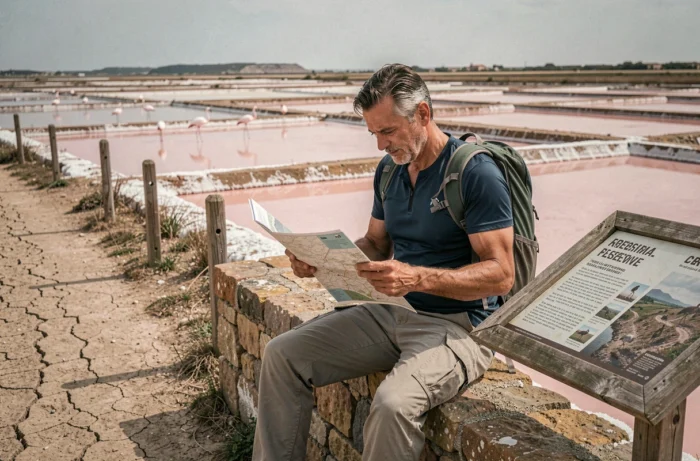
The Pesquiers salt marshes occupy the depression between the two tombolos. This area, once exploited for salt production, is now a protected wetland that hosts remarkable birdlife.
Flamingos are present here for a large part of the year, visible from the paths that border the basins. Unlike established bird parks, observation takes place here in an open environment, without dedicated structures. A pair of binoculars or a small telephoto lens can radically change the experience.
- Free access via the paths along the western tombolo (Almanarre side) or eastern (Capte road side)
- Best light for photography in the early morning or late in the day
- Imperative respect for distances: flamingos take off if approached within a few dozen meters
The combination of salt marshes, little train, and coastal path allows covering the three facets of the peninsula (wetland, transport heritage, rocky coast) in a dense day without taking the car.
The Giens peninsula concentrates its assets within a limited perimeter, making each movement short. The key point to remember is the fragility of the site: the ongoing Grand Site de France project aims precisely to reconcile tourist attendance and the preservation of the double tombolo and the salt marshes. Adapting your movements, prioritizing walking or the little train, and respecting regulatory zoning are the conditions for the place to remain what it is.