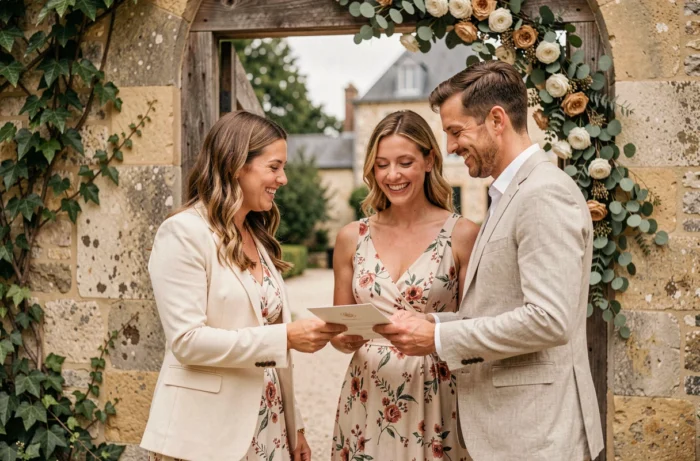
The welcome for guests at a wedding is not just about a welcome sign and a glass of champagne. It is a logistical and narrative setup that shapes the perception of the entire day. We will detail the technical levers that mainstream articles tend to overlook.
Accessibility chain from parking to restrooms: the blind spot of the reception
A successful welcome begins with a complete accessibility chain of the reception venue. The event sector now recommends auditing the guest journey from start to finish: parking, pathway to the entrance, internal circulation, restrooms, evacuation. Ignoring even one link creates a bottleneck that affects all guests, not just those with disabilities.
We recommend conducting a physical scouting of the venue at least two months before the wedding. Check the width of pathways, the nature of the ground (gravel, lawn, cobblestones), the presence of steps without handrails, and the nighttime lighting of external accesses. A gently sloping terrain with short grass may seem passable, but it becomes a trap after a rain for heels or a wheelchair.
The restrooms deserve special attention. Plan for discreet lighting to mark the paths at night, and confirm with the catering provider that access remains clear during service. A corridor cluttered with dish crates at 11 PM is a concrete problem that decoration does not solve.
To delve deeper into this often-overlooked aspect, the tips from Passion Mariage for welcoming guests detail several organizational techniques applicable from the scouting phase.
Narrative welcome of the wedding: structuring the arrival like a story
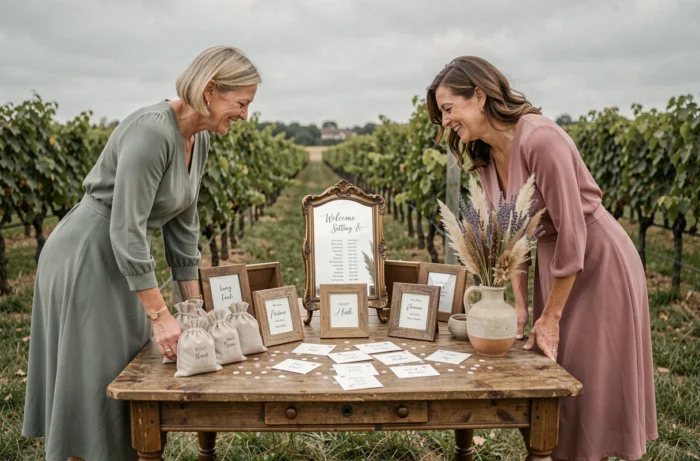
The trend that is emerging in 2026 goes beyond the Instagrammable decorative theme. The welcome is conceived as the first chapter of the couple’s story. Every touchpoint, from the pre-wedding information email to the entrance sign, contributes to a coherent editorial line that gives meaning to the day.
In practical terms, this means that signage, the texts read during the ceremony, the welcome music, and digital materials share a common thread. A couple passionate about cinema does not settle for a photobooth with props: they choose a credits-style typography for the seating plan, program a sequenced welcome soundtrack, and write the ceremony booklet like a script.
The welcome booklet as a narrative tool
The paper or digital booklet effectively replaces the static welcome sign. It includes the schedule, anecdotes about the couple, the venue map, and practical instructions. A QR code at the entrance links to an interactive version with a shared playlist or message wall.
A well-designed booklet cuts the logistical questions posed to the couple in half. Guests know where to park, what time the meal starts, and where to find a quiet corner. The witnesses and the coordinator gain valuable time.
Managing guest flow between ceremony and reception
The most critical moment of the day occurs between the end of the ceremony and the start of the cocktail. Guests arrive in waves, do not all know the venue, and the couple is occupied with photos. Without a transition device, this time slot generates passive waiting and disorientation.
- Designate two or three close friends as “welcome references” with a precise brief: direct to the bar, signal the restrooms, introduce guests who do not know each other. This role goes beyond that of a simple witness.
- Set up a refreshment point accessible right after the ceremony, not just at the reception venue. Infused waters or a juice bar placed before the main cocktail absorb waiting time.
- Plan for light and autonomous entertainment (collaborative guestbook, “anecdotes about the couple” card game, free photo space) that does not require a host and naturally occupies the early arrivals.
A common mistake is to concentrate all the entertainment on the evening. Guests who wait forty minutes without a reference or activity form their first negative impression at that moment, not during the meal.
Accommodation and post-reception logistics: anticipating the end of the evening
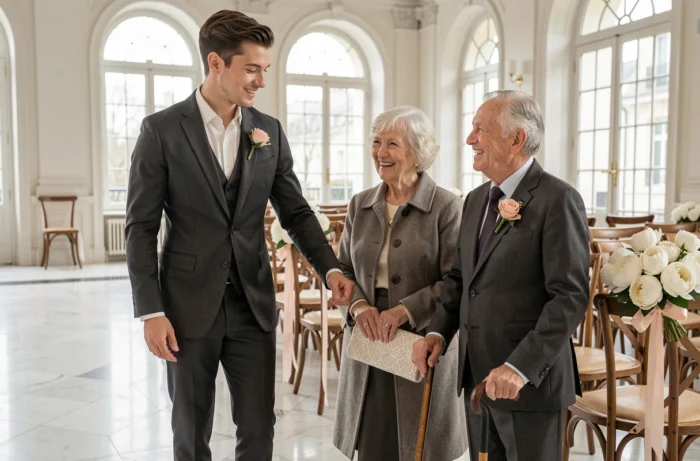
The welcome for guests does not stop at dessert. The management of accommodation on-site or nearby is an integral part of the welcome setup. More and more couples are choosing venues with accommodation capacity, transforming the reception into a short stay.
When the venue offers rooms or cottages, we recommend assigning accommodations based on affinity rather than registration order. A distribution plan communicated one week before the wedding avoids last-minute negotiations and frustrations.
The comfort kit in the room
A minimalist kit in each room (bottle of water, pain reliever, earplugs, next day’s program) extends the quality of the welcome until the Sunday brunch. This inexpensive detail transforms the overall experience and encourages guests to stay for the next day.
For guests leaving the same evening, clear signage of transport options (local taxi numbers, reserved shuttle, organized carpooling via a messaging group) secures departures and protects the couple’s liability. The decoration of the reception venue may be sublime: if a guest searches for their taxi for twenty minutes on an unlit dirt path, that is the memory that will remain.
The welcome of a wedding is played out on micro-logistical decisions much more than on aesthetic choices. A smooth guest journey, a coherent narrative, and anticipation of transitions are enough to transform a beautiful party into a truly memorable day for every guest present.