
The European regulation 2023/1542 on batteries will enter an operational phase in 2026, with recycling performance, traceability, and reporting obligations that change the cost structure for recyclers. For a group like Derichebourg, these regulatory constraints reshape how the buyback price of used batteries is calculated, beyond just the fluctuation of metal prices.
Battery Regulation 2023/1542: What Changes for French Recyclers
The European regulatory framework no longer just sets global collection targets. It now imposes recovery rates by material. For lithium, the target is 50% recovery by 2027, then 80% by 2031. Cobalt, nickel, copper, and lead must achieve 90% recovery by the same 2027 deadline.
These material-specific thresholds require operators to invest in finer separation processes. A recycling center that previously only shredded and melted must now prove, metal by metal, that it meets the prescribed yields. To anticipate the Derichebourg battery price in 2026, this reality must be integrated: the cost of regulatory compliance now weighs as heavily as the price of lead or lithium in price formation.
The regulation also introduces substance control requirements and a digital passport for each battery placed on the market. Recyclers must trace the origin of batches, document flows, and submit consolidated data to authorities. This reporting represents a new expense item, absent from the historical economic model of scrap dealers.

Derichebourg Buyback Price: From Metal Prices to Regulatory Treatment Costs
Historically, the price offered by Derichebourg centers for a used battery followed a simple logic: the price of lead (for lead-acid batteries) or the estimated value of recoverable metals (for lithium-ion) determined the purchase price, with a discount corresponding to transportation and processing costs.
This mechanism is shifting. According to specialized analyses, the price now reflects the net cost of regulatory treatment, including imposed yields, substance control, and reporting obligations. The price paid to the individual or professional who brings in their batteries no longer depends solely on the value of the recovered metals: it incorporates the additional cost of compliance.
For lead-acid batteries, which still represent the bulk of volumes processed by the group, the impact is twofold. Lead remains recoverable, but environmental requirements regarding sulfuric acid and treatment residues increase costs. Field reports vary on the exact extent of this cost increase, but the trend is documented by several industry players.
Lithium-Ion Batteries: A Special Case in the Pricing Structure
Lithium-ion batteries pose a specific problem. The announced joint venture between Derichebourg and LG Energy Solution, with a factory planned in Bruyères-sur-Oise with a capacity of over 20,000 tons per year, specifically targets this segment. The project is set to start in 2026, with the facility expected to be operational in 2027.
LFP (lithium iron phosphate) batteries, increasingly found in affordable electric vehicles, are currently unprofitable to recycle. They contain little cobalt and nickel, the two metals that make recycling economically viable. Their processing generates a deficit that the recycler must absorb or pass on to their prices.
Batch Traceability and Pricing Segmentation: The Advantage to Documented Contributions
Regulation 2023/1542 pushes recyclers towards a finer segmentation of their pricing grids. A well-traced batch of batteries, with identified chemistry and documented history, represents a lower treatment risk than an anonymous contribution with unknown composition.
Derichebourg should logically value well-traced batches at the expense of anonymous contributions. An individual bringing in a classic lead-acid car battery, identifiable and common, will receive a different price than someone depositing a mixed batch of lithium-ion batteries of uncertain origin.
The criteria influencing this segmentation are as follows:
- The chemistry of the battery (lead-acid, NMC, LFP, NCA), which determines the value of recoverable metals and the required treatment process
- Supporting documentation (original invoice, technical sheet, digital passport when available), which reduces sorting and analysis costs upfront
- The volume and regularity of the contribution, with professionals delivering homogeneous batches benefiting from negotiated conditions that sporadic contributions do not receive
Battery Recycling Market in 2026: Tensions Between Industrial Capacity and Regulatory Obligations
The global lithium-ion battery recycling market was estimated at $5.8 billion in 2025, with a projection of $6.9 billion in 2026 according to Global Market Insights. The expected compound annual growth rate until 2035 reaches 20.6%. These figures reflect an acceleration in the demand for processing capacity.
In France, the sector is gaining momentum with several sites between Saint-Quentin and Dunkirk. The Derichebourg-LG Energy Solution project in Bruyères-sur-Oise fits into this dynamic. The available data does not yet allow for measuring whether these capacities will be sufficient to absorb the growing flow of end-of-life batteries, especially with the acceleration of electric vehicle sales in recent years.
The regulatory pressure creates a paradoxical situation for recycling operators:
- Performance obligations increase processing costs, which drives buyback prices down for the holder of the used battery
- The rise in demand for recycled raw materials (cobalt, nickel, lithium) pushes these same prices up, as recovered metals gain strategic value
- The net result on the price depends on the balance between these two forces, and this balance varies according to the battery chemistry and the metal prices at the time of the transaction
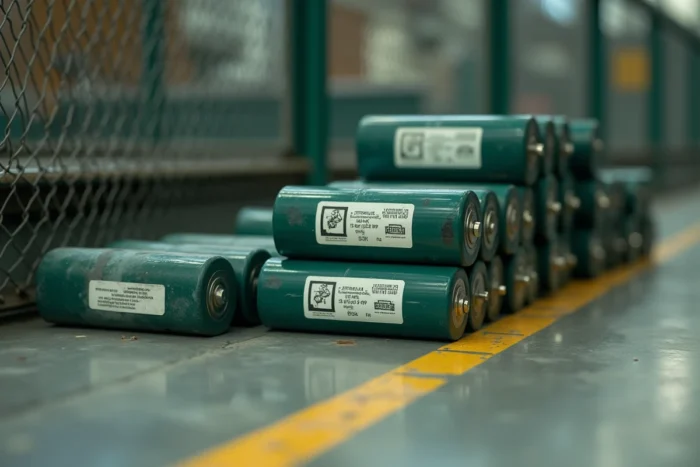
For professionals and individuals selling their used batteries to Derichebourg in 2026, the price displayed per kilo will only tell part of the story. The pricing grid now incorporates the weight of European regulation, not just the price of lead or lithium in the markets. Monitoring metal prices remains useful, but understanding the recycler’s obligations is equally important to anticipate price changes.