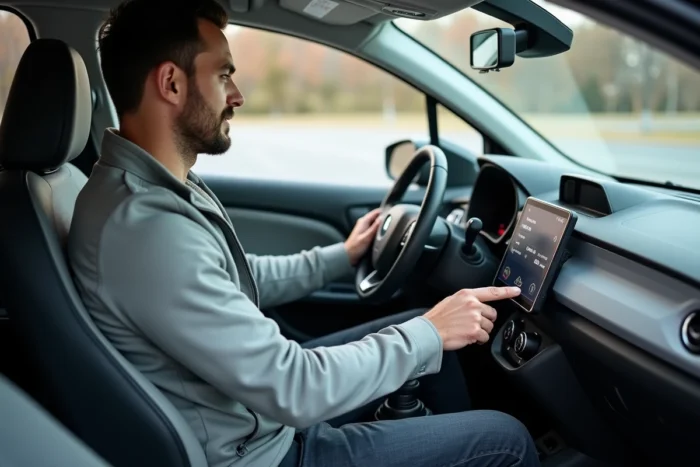
The ECO mode of the Citroën C3 is not just a green light on the dashboard. In recent versions (phase III CC21, according to the user guide edition 01-2024), this mode simultaneously manages the air conditioning, heating, and several non-critical electrical aids to reduce the load on the alternator. This load-shedding logic explains why the air conditioning sometimes shuts off without driver intervention, or why the radio turns off after a few minutes of parking.
What the computer decides for you in ECO mode
The ECO mode of the C3 is not a simple engine power limiter. The computer continuously monitors the battery status and driving conditions. When it determines that the electrical demand is too high, it automatically reduces or shuts off certain comfort features.
Automatic air conditioning is the first affected. After a prolonged stop or in slow driving (traffic jams, 30 km/h zones), the system may limit or even disable the air conditioning without displaying an explicit alert. The driver feels a gradual increase in temperature inside the cabin, often mistakenly attributed to a malfunction of the air conditioning.
Heating and secondary electrical aids undergo the same treatment. The ECO mode acts like an onboard energy manager that balances comfort and battery preservation. This architecture explains a point that often comes up in forums: the ECO mode reactivates itself after each vehicle restart, as the computer considers it the default state.
Knowing how to disable the eco mode on Citroën C3 requires understanding this logic of automatic reactivation; otherwise, each manipulation remains temporary.
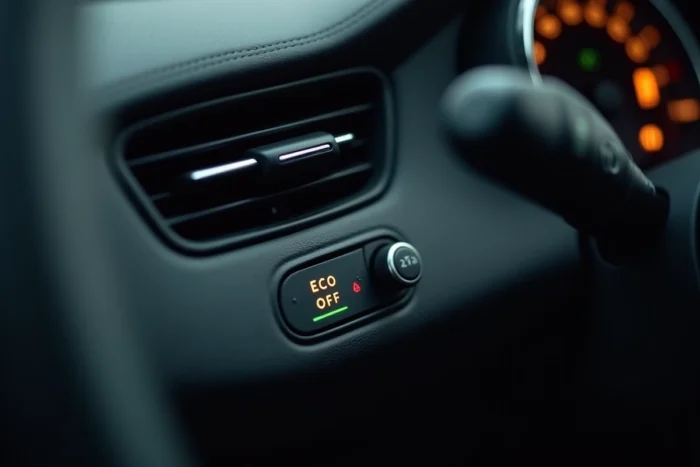
Disabling ECO mode on Citroën C3: transitional action, not a permanent setting
The Citroën CC21 guide (edition 01-2024) specifies a technical point often misunderstood: exiting ECO mode requires a physical action on the clutch or accelerator pedal. On versions equipped with Stop & Start, simply restarting the engine is enough to temporarily exit this state.
The word “temporarily” is important. This is not a classic on/off switch. The computer will continuously reassess the driving conditions and battery load, and will reactivate ECO mode as soon as it deems necessary. In practice, on an urban route with frequent stops, the mode may re-engage several times.
Possible manipulations depending on the generation of C3
The procedure varies depending on the year and trim level of the vehicle. On some versions, a physical “ECO” button is present on the center console or near the gear lever. On others, deactivation is done through the touchscreen menu, in the vehicle settings.
- On C3s equipped with a dedicated ECO button, a simple press is enough to switch between modes, but the state returns to ECO at the next engine start
- On models with a touchscreen, the setting is usually found in the “Vehicle” or “Driving” menu, but again, the setting does not persist from one trip to another
- On older versions lacking these interfaces, ECO mode is entirely controlled by the computer without the possibility of direct manual deactivation
In all cases, no standard manipulation allows for the permanent removal of ECO mode. The only avenue for a lasting change would involve reprogramming the computer in a workshop, an intervention that falls outside of regular maintenance.
Actual impact of ECO mode on fuel consumption and comfort
ECO mode reduces fuel consumption by limiting the electrical power demands on the alternator. The less the alternator works, the less the thermal engine compensates, and the less it consumes. The exact gain depends on the driving profile, but it mainly concerns urban trips where stops and restarts are frequent.
The trade-off comes at the cost of thermal comfort. In summer, limited air conditioning in traffic jams quickly turns the cabin into a sauna. In winter, limited heating during slow driving phases makes the first kilometers uncomfortable.

The question of driving comfort goes beyond temperature. Some drivers report a slightly less responsive accelerator in ECO mode, related to the smoothing of torque requests by the computer. This sensation is more noticeable in urban driving than at stabilized speeds on the road.
When ECO mode becomes a battery alert signal
An ECO mode that activates unexpectedly or refuses to deactivate despite usual manipulations may indicate a battery problem. If the voltage of the 12V battery drops below a certain threshold, the computer switches to ECO mode permanently to protect the electrical circuit.
Several testimonies on Citroën forums describe this scenario: the radio turns off after a few minutes, accessories shut down one by one, and the vehicle eventually refuses to start. In this case, the solution is not to try to disable ECO mode but to have the battery and alternator checked.
- A battery older than four to five years on a C3 used for short trips presents an increased risk of chronic undercharging
- A faulty alternator can keep ECO mode active permanently, even with the engine running
- Diagnosis can be quickly made with a simple voltage test, feasible in a workshop or with a multimeter
Adapting your driving rather than fighting the computer
Trying to disable ECO mode every trip amounts to fighting against an onboard management logic designed to preserve the vehicle’s longevity. A more effective approach is to limit the situations where the computer deems it necessary to restrict comfort.
Driving on sufficiently long routes for the alternator to properly recharge the battery reduces unexpected activations. Manually turning off unused consumers (heated seats, rear defrost, USB charging ports) frees up electrical capacity and delays the switch to ECO.
ECO mode remains a balance by the computer between battery longevity and driving pleasure. Understanding this allows for a form of control without reprogramming or risky manipulation. A vehicle with a well-functioning battery and alternator triggers this mode much less often, and daily inconvenience becomes marginal.