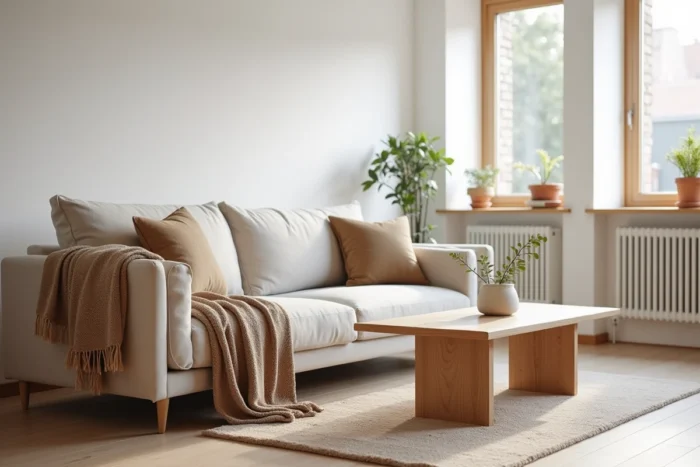
Your living room has seemed stagnant for months, even though you’ve only changed the sofa cushions. The explanation often lies in how materials, light, and volumes interact, much more than in the furniture itself. The 2026 decor trends for a modern and welcoming home revolve around texture as a sensory tool, technology made invisible, and continuity between indoors and outdoors.
Textured surfaces and raw materials: comfort that can’t be seen but can be felt
Have you ever noticed that a lime plaster wall invites touch, while a smooth satin-painted wall leaves you indifferent? This reflex summarizes a strong evolution: modern interior decoration no longer seeks only to appear sleek; it wants to provoke a tactile sensation.
This translates into less smooth finishes and more pronounced textures. A brushed wood table top, a raw earth wall covering, a corduroy sofa instead of a stretched fabric one: each surface gains in relief. Bio-sourced materials (linen, hemp, boucle wool) are gradually replacing smooth synthetics, not out of ideology but because they age better and create a warmer atmosphere.
The underlying idea is simple. A room dominated by natural materials requires fewer decorative objects to seem inhabited. An exposed stone or old brick wall is enough to give character to a living room, whereas a white wall requires paintings, shelves, and lighting to avoid looking empty. This section home on News Quirk explores several approaches to balance textures in a contemporary interior.
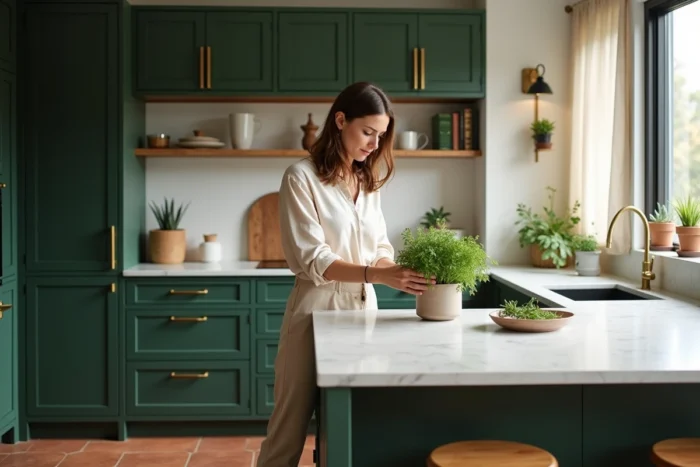
Natural light and smart lighting: making technology invisible
Lighting remains the most underestimated lever in a modern home. People think about wall colors, furniture choices, space layout, but rarely consider the quality of light that bathes each room.
Maximize daylight before adding lamps
Before installing spotlights or LED strips, the priority is to exploit existing openings. A curtain that is too thick, a tall piece of furniture placed in front of a window, or a poorly oriented mirror can halve the perceived brightness of a room. Removing these obstacles costs zero euros and radically changes the atmosphere.
Natural light remains the primary factor of welcome in an interior. The biophilic trends of 2026 emphasize this point: orient living spaces towards light sources, favor shades that filter without blocking, and use light colors on reflective surfaces (ceiling, window frames).
Connected lighting: useful as long as it remains discreet
Smart lighting systems (automatic dimming, light scenarios according to the time) are becoming more common. The challenge is not to pile up gadgets but to keep technology invisible to preserve aesthetics. A recessed switch that adjusts color temperature throughout the day provides real comfort without visible cables or unsightly boxes.
Automated blinds and audio integrated into the walls follow the same logic: they improve daily life as long as they visually disappear. A speaker placed on a shelf disrupts a clean line; the same speaker recessed behind a wooden panel no longer exists to the eye.
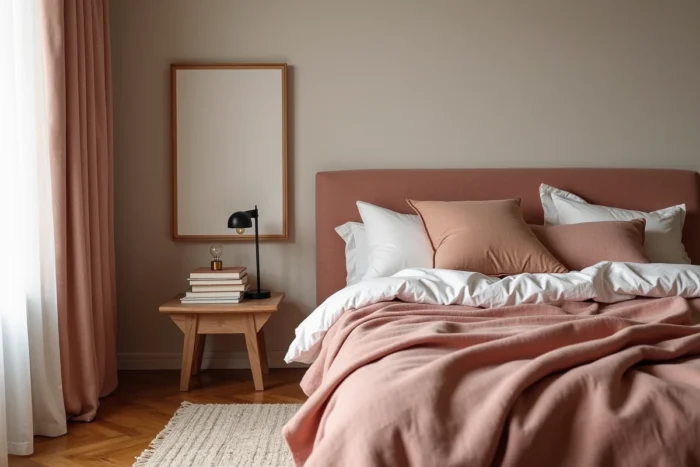
Continuity between indoors and outdoors: enlarging space without pushing walls
Why do some modestly sized apartments seem spacious while larger houses appear cramped? Often, the answer lies in the relationship between indoor rooms and outdoor spaces, even if they are small.
A balcony, terrace, or simple windowsill treated in the same palette as the living room creates visual depth. Using the same flooring (or a similarly colored material) between a kitchen and an adjoining terrace erases the boundary. The gaze no longer stumbles on the bay window; it continues outside.
This approach also works in urban apartments. A vertical garden on a balcony wall, visible from the sofa, adds a plant dimension without taking up floor space. Organic shapes (rounded pots, curved seating, tables with irregular edges) enhance this impression of integrated nature, far from purely linear outdoor furniture.
Sustainable and modular furniture: buy less but keep longer
The reflex to change furniture with each season is losing ground. The 2026 trends confirm a shift towards repairable, modular furniture designed to last. This is not just an ecological issue; it’s also an aesthetic choice: a solid wood piece that patinas over time gains character, whereas a laminated particle board piece deteriorates.
Here are the criteria that distinguish durable furniture from disposable purchases:
- Mechanical assemblies (screws, dowels, tenons) rather than glued, allowing for disassembly and repair
- Certified wood or identifiable bio-sourced material, with a finish that can be sanded and refinished
- Real modularity: repositionable shelves, integrated extensions for a table, replaceable covers for seating
A sofa whose cover and padding can be changed costs more upfront. Over ten years, it is significantly cheaper than an entry-level model replaced three times.
The modern style in 2026 values objects that tell a story of duration, not those that showcase novelty. An oiled oak table bearing the marks of daily life, a brass light fixture that patinas, a wool rug whose shades soften: these elements compose a lively decor, far from the catalog-stagnant interior.
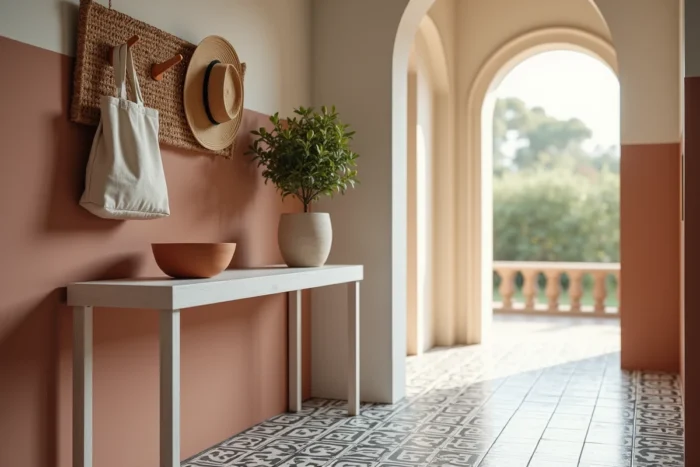
Creating a home that is both modern and welcoming does not require replacing everything. An adjustment of textures, a focus on natural light, and a few carefully chosen pieces for their longevity are enough to transform the atmosphere of an interior. The next time you consider a change, touch the materials before looking at the colors: that’s often where the difference lies.