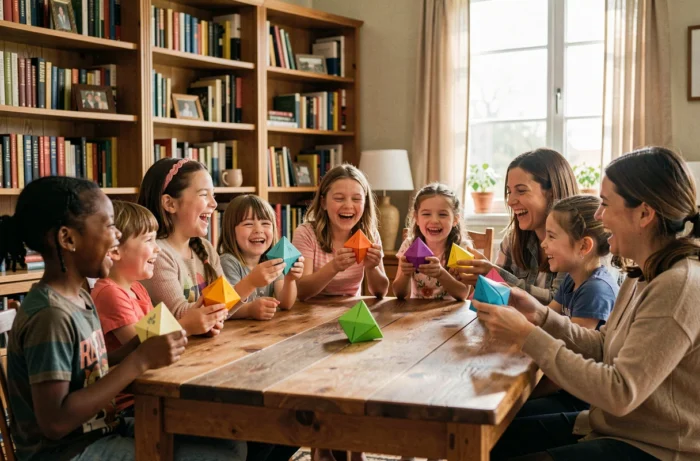
The paper fortune teller remains a classic children’s game, but it is also a remarkably effective tool for family entertainment. A square of paper, a few folds, and the content of the sections makes all the difference. What jokes should be slipped inside to provoke bursts of laughter from both the young and the adults? Here are twenty tested phrases, categorized by humor style.
To find more jokes for a paper fortune teller, some resources also offer funny phrases suitable for beginners.
1. The Gardener’s Ultimate Joke

“What is the ultimate joke for a gardener? To be planted by his friends.” Ultimate jokes work perfectly in a fortune teller: the question is on one flap, the answer on the other. The short format fits the size of the sections.
2. The Fish Riddle
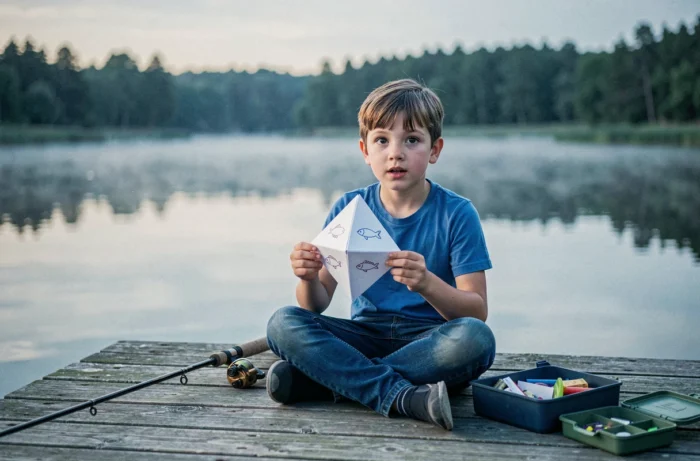
“What does a fish say when it bumps into a wall? Dam.” This riddle triggers almost automatic laughter from kindergarten and elementary school children. The visual and sound play makes it easy to remember and repeat in the schoolyard.
3. The Grimace Challenge

Instead of a classic joke, a section can contain a small challenge to complete immediately: “Make the ugliest grimace possible for ten seconds.” This recent trend combines humor and animation, transforming the fortune teller into a micro-animation game rather than just a reading tool.
4. The Chicken’s Trick Question
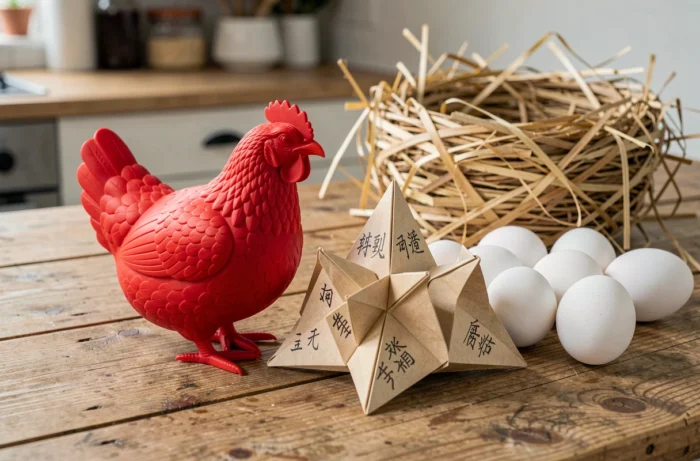
“Why don’t chickens play football? Because they are afraid of free kicks.” The contrast between the animal and the sport creates surprise. Children love to ask this question to adults, convinced that no one will find the answer.
5. The Ridiculous Dance Challenge

“Dance like a penguin for fifteen seconds.” Alternating jokes and challenges in the same fortune teller reignites interest with each turn. Recent creative activity guides recommend this mix for short and lively family sessions.
6. The Dentist’s Ultimate Joke

“What is the ultimate joke for a dentist? To live on a bridge.” Jokes about professions provide an almost unlimited reservoir. Each fortune teller can contain two or three without getting tiresome, as long as the professions vary.
7. The Tomato Riddle
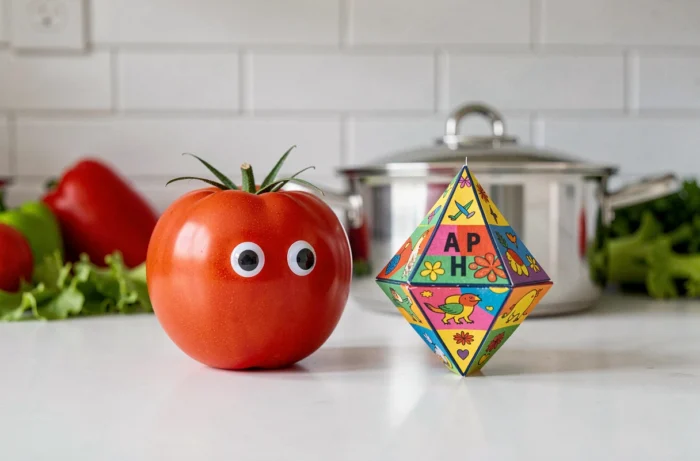
“What do you call a cat that falls into a paint pot on Christmas Day? A cat-paint of Christmas.” You can replace it with the tomato version: “What does a tomato do in a swimming pool? Makes sauce.” Both short formats fit into a standard section.
8. The Absurd Water Question
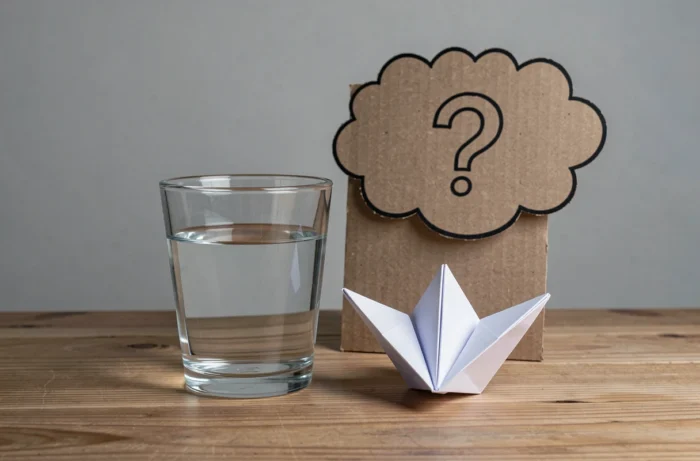
“What is the wettest letter in the alphabet? The O, because it is always in the water.” Short pun riddles capture attention from kindergarten onwards. The phonetic logic makes them accessible without further explanation.
9. The Animal Imitation Challenge
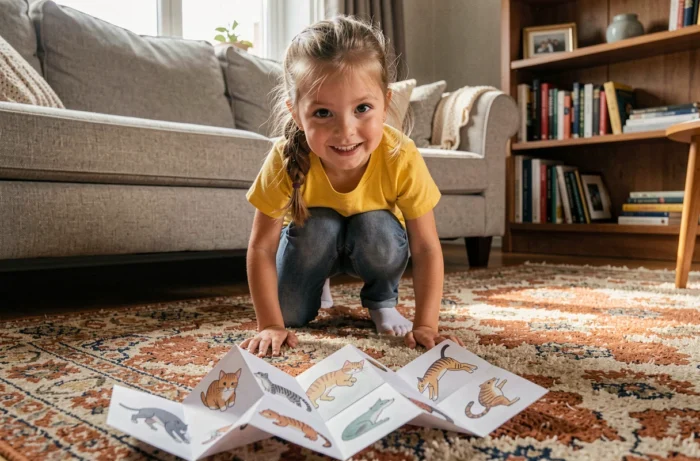
“Imitate the crow of a rooster in front of everyone.” This type of section works particularly well in a group, during a birthday party or snack time. The laughter comes as much from the performance as from the player’s assumed embarrassment.
10. The Baker’s Ultimate Joke
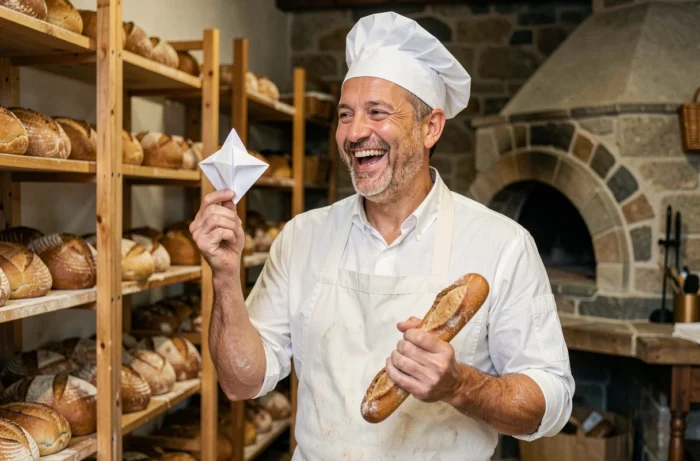
“What is the ultimate joke for a baker? To tell stories that are not a piece of cake.” The series of ultimate jokes about professions can fill an entire fortune teller for a “professions” theme, which is very popular in class.
11. The School Riddle
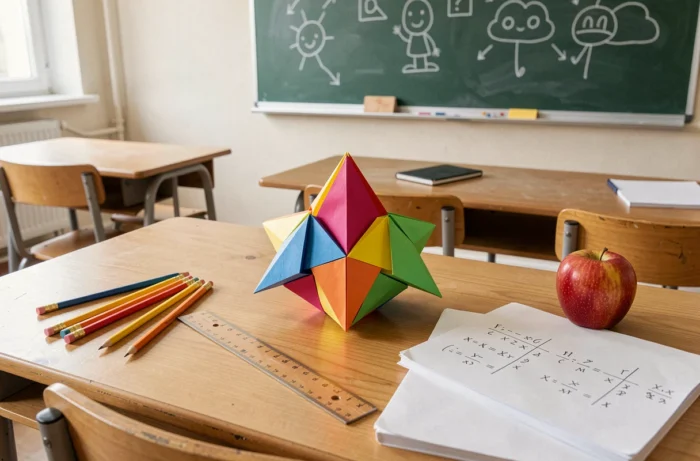
“Why is the math book sad? Because it has too many problems.” School-themed jokes circulate naturally in the playground. Writing them in a fortune teller makes them shareable and replayable.
12. The Song Challenge
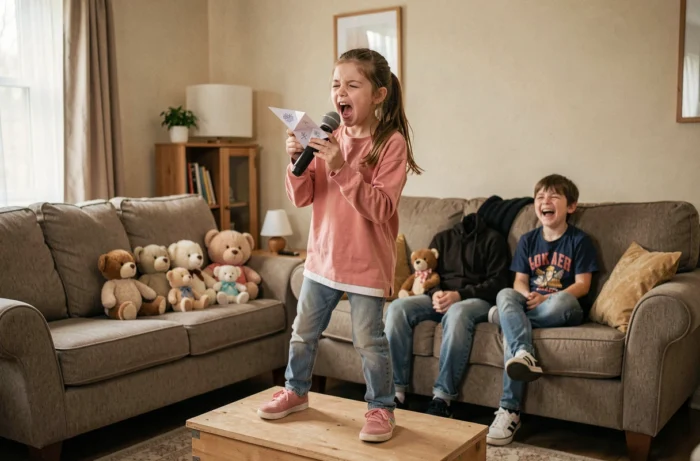
“Sing ‘Happy Birthday’ while rapping.” Musical challenges create a welcome change of tone between two riddles. The intentional ridiculousness puts everyone at ease.
13. The Elephant’s Trick Question
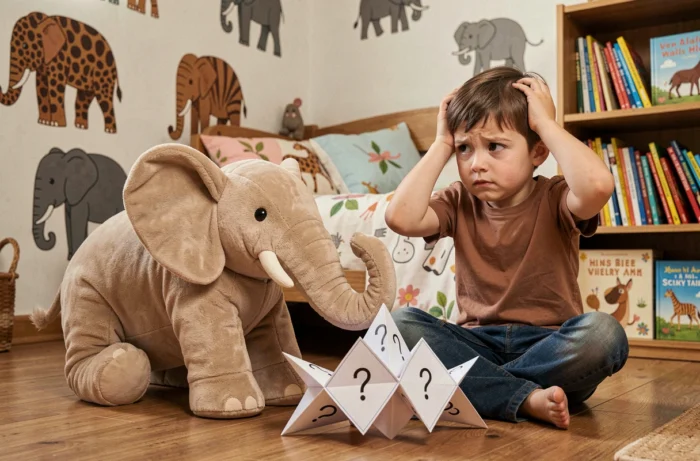
“Why don’t elephants ride bikes? Because they don’t have thumbs to ring the bell.” The absurd mental image makes children laugh with its visual aspect. Adults smile at the twisted logic.
14. The Vampire Riddle
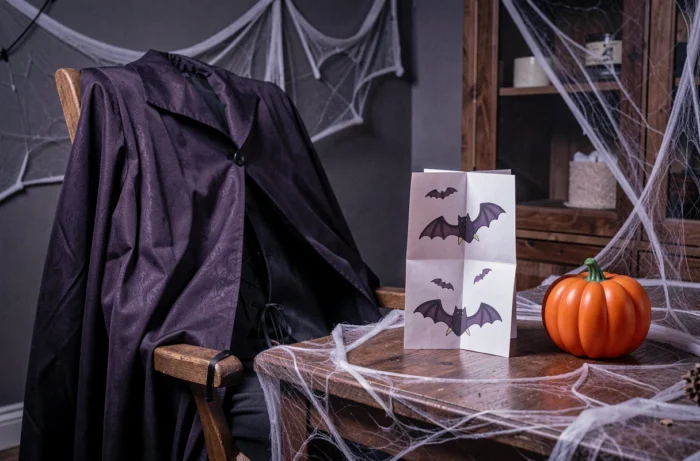
“What is the vampire’s favorite dish? Crocs-monsieur.” This joke works particularly well in a Halloween-themed fortune teller. Seasonal fortune tellers (Halloween, April Fool’s Day, Christmas) refresh the game without changing the folding principle.
15. The Personal Question Challenge
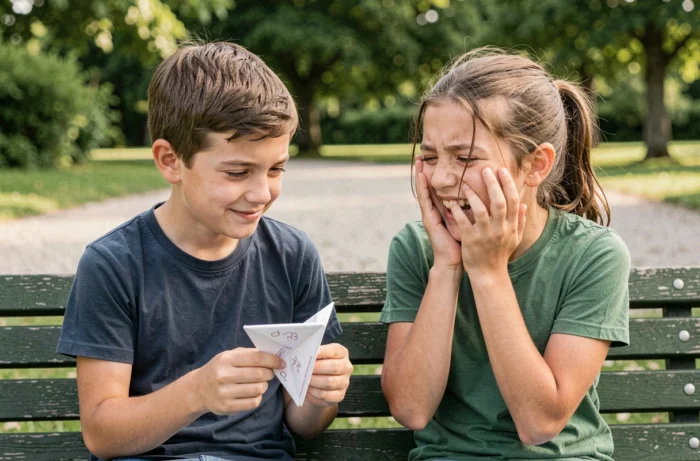
“Describe your weirdest dream in thirty seconds.” This hybrid format between a challenge and a question breaks the ice. It is suitable for mixed groups where children do not yet know each other well.
16. The Plumber’s Ultimate Joke

“What is the ultimate joke for a plumber? To have a son who sinks at school.” The double meaning of the word “sink” works from second grade onwards, when children begin to perceive polysemy.
17. The Upside Down World Riddle
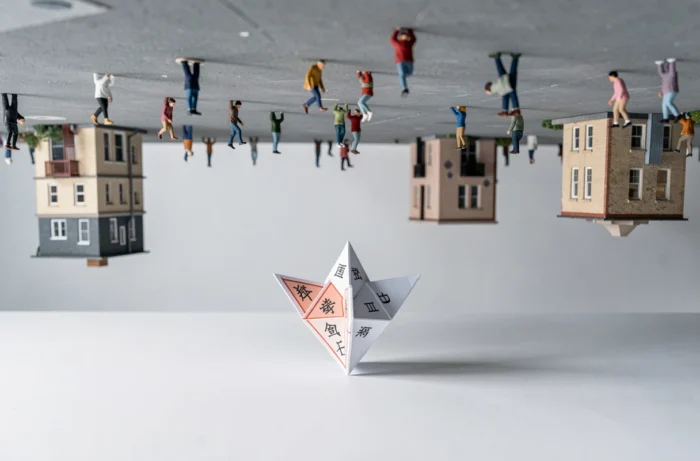
“What has teeth but doesn’t eat? A comb.” Everyday object riddles stimulate observation as much as humor. The child looks for the answer around them before lifting the flap.
18. The Silence Challenge
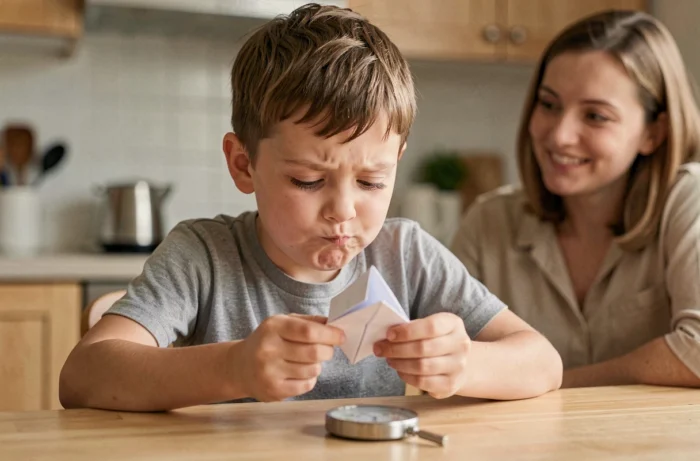
“Don’t say a word for a full minute, even if someone talks to you.” This challenge reverses the dynamic of the game: the group tries to make the player crack. Laughter is guaranteed.
19. The Ghost Joke
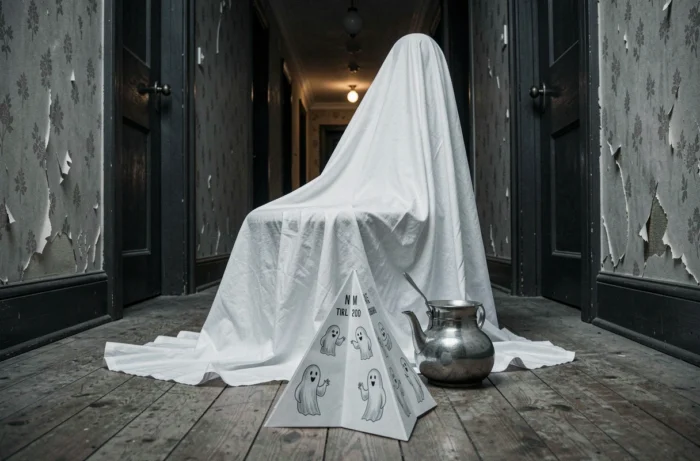
“How does a ghost cross the sea? By ghost ship.” The pun works better orally than in writing, making it ideal content for the fortune teller: the player reads the joke aloud, and it’s the pronunciation that triggers the laughter.
20. The Absurd Philosophical Question
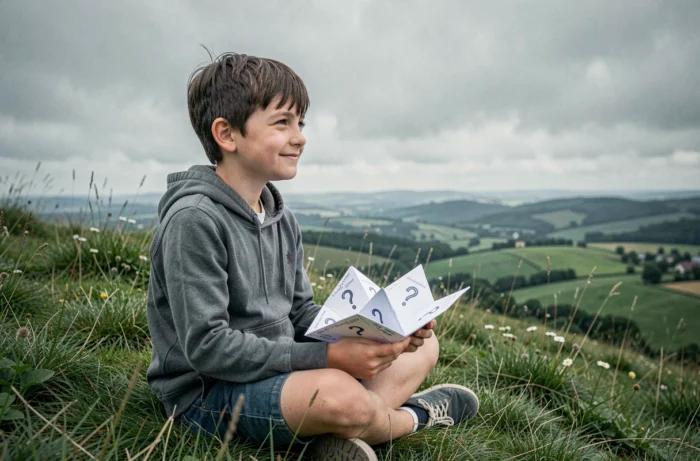
“If nothing sticks to Teflon, how did they stick Teflon to the pan?” This last section targets both adults and children. The younger ones laugh at the serious tone, while the older ones appreciate the unassailable logic.
A well-filled paper fortune teller mixes riddles, ultimate jokes, challenges, and dares. The folding takes a few minutes, while the content of the sections determines the duration and intensity of the game. Varying the styles from one section to another remains the best way to surprise at each turn.