Between intensive workshop weeks, evenings spent finalizing a prototype, and days in companies for those in work-study programs, the life of a graphic design student in 2026 does not resemble the smooth image of training brochures. This article measures the educational formats, work rhythms, and skills mobilized daily in these programs.
Workshop, work-study, competitions: distribution of student time in graphic design
Graphic design programs combine several overlapping educational formats throughout the week, even within the same day. To understand the daily life of graphic design students, one must look at how these blocks are concretely articulated.
| Educational format | Typical duration | Place in the program |
|---|---|---|
| Lectures and regular workshops | Weekly sessions | Core curriculum, present all year |
| Intensive weeks (workshops) | 3 to 5 consecutive days | Several times per semester, unique brief with final presentation |
| Work-study school/company | Typical rhythm 4 days company / 1 day school | From the bachelor’s degree in some programs |
| External competitions | Variable (preparation weeks) | Integrated into the curriculum, impact grading |
| Personal work outside of class | Evenings and weekends | Portfolio, ongoing projects, research |
This table highlights a point that graphic trend pages do not show: the majority of student time is spent outside of traditional classes. Personal work, competitions, and workshops occupy at least an equal place to supervised training hours.
Intensive workshop weeks: the format that structures the rhythm
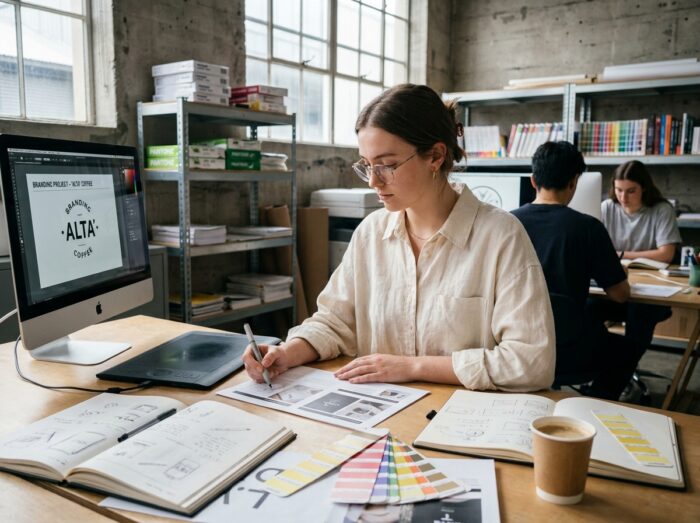
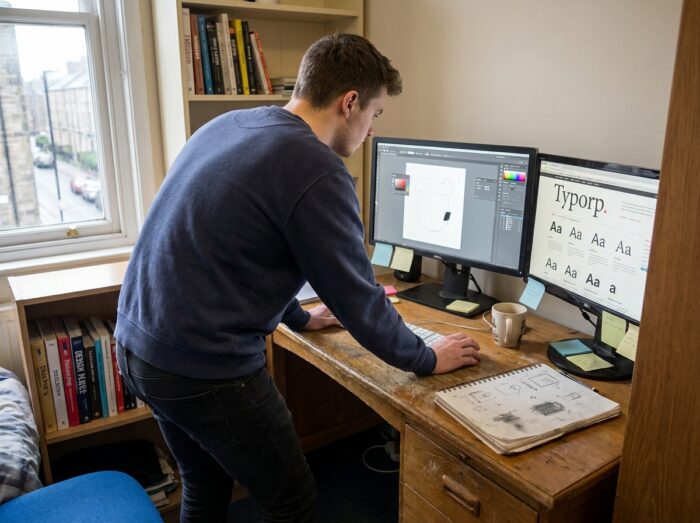
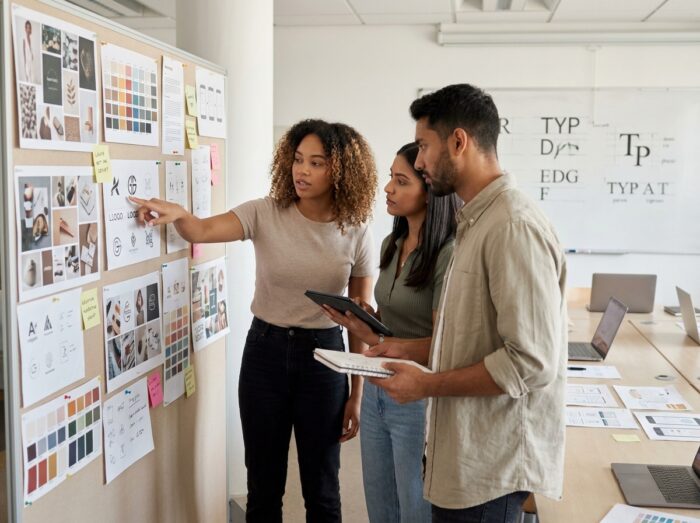
The condensed workshop has become a pillar of graphic creation training. The principle: a unique brief distributed on Monday, a research and ideation phase in the first days, prototyping, followed by a presentation at the end of the week.
This format imposes a radically different time management compared to a weekly class. The student cannot spread their production over several weeks. Everything happens in a few days, from research to final presentation.
In some programs, these workshops lead to manipulable physical installations, not just digital files. The portfolio then becomes a spatial object, which requires acquiring skills in assembly, staging, and scenography that screen-only work does not cover.
What the workshop changes in personal organization
Intensive weeks create peaks of workload followed by calmer phases. Students describe a seesaw rhythm, with evenings occupied during workshops and weekends caught up afterward.
This alternation between high intensity and recovery differs from the classic university model where the workload is distributed more evenly over the semester.
Work-study in graphic design: juggling between professional missions and personal production
Work-study increasingly structures student life in graphic design, with a very constrained rhythm. The common format, four days in a company for one day at school, leaves little room for personal work and creative research.
In companies, the missions focus on operational graphic production: adapting communication materials, modifying visuals for different channels, creating visual identity elements. The gap with exploratory projects conducted at school can sometimes be significant.
- In companies, deliverables are framed by brand, deadline, and client validation constraints, which develops rigor but limits experimentation
- At school, artistic direction or creation projects encourage graphic risk-taking, with more open briefs
- The personal portfolio, developed during free time, must reconcile these two registers to reflect both professional reliability and creative uniqueness
Students in work-study describe fatigue related to this constant switching between two modes of operation. The time for research and experimentation is minimized, often pushed to weekends.
AI tools and hybrid skills: what has changed in workshops
Generative artificial intelligence has altered the upstream phases of student projects. Image generation and rapid prototyping tools now intervene as early as the search for visual intentions, even before composition work begins.
However, mastery of graphic fundamentals (typography, visual hierarchy, color management) remains the evaluated foundation in presentations. AI accelerates ideation but does not replace artistic direction.
What concretely changes in workshops:
- Students use AI to produce variations of textures, palettes, or compositions during the exploratory phase
- Prototyping increasingly includes motion design and interactive elements, even in programs historically focused on print
- Presentations incorporate the justification of creative choices in response to AI-generated proposals, which requires enhanced argumentative skills
The curriculum no longer solely trains for the creation of static images. The expected skills cover visual communication in a broad sense: animation, user experience, spatial scenography. The profile of the graphic arts student has become hybrid out of necessity.
Competitions and portfolio: a parallel production pressure
In several schools, participation in external competitions is an integral part of the curriculum. These competitions add a layer of production that piles on top of course projects, work-study missions, and personal work.
Preparing for a competition takes several weeks: analyzing the brief, research, creation, and layout of the submission. For students already in work-study, this additional burden further compresses available time.
The portfolio becomes the true thread running through the curriculum. It documents every project, every workshop, every professional mission. Its construction is a continuous effort that far exceeds the scope of classes. Students who neglect this aspect find themselves struggling when applying for internships or jobs.
The daily life of graphic design students in 2026 is measured less in class hours than in their ability to manage simultaneous demands. Technical training remains the foundation, but it is personal organization in the face of fragmented educational formats that distinguishes the paths.