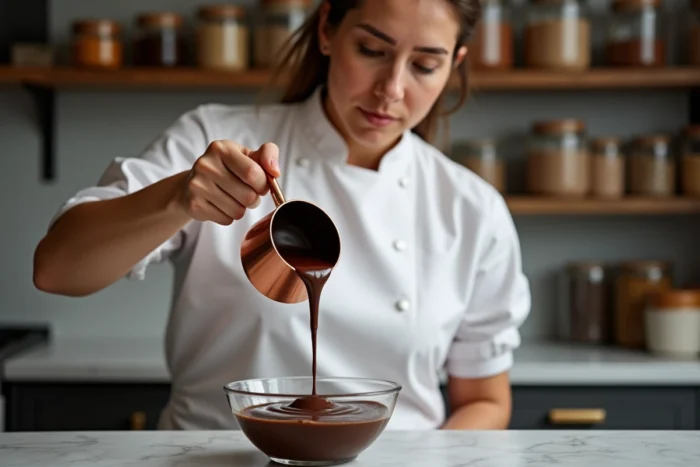
When you take a ganache out of the refrigerator and it remains soft enough to run down the sides of the cake, the problem rarely lies with the recipe itself. In most cases, it’s a technical detail upstream (fat content of the cream, pouring temperature, emulsification method) that causes the result to fail. Achieving a thick and creamy ganache relies on a few precise, reproducible actions each time.
Fat content of the cream: the parameter that the recipe does not specify
Everywhere you read “whole liquid cream,” but this term covers very different products in supermarkets. A cream with 20% fat and a cream with 35% will yield completely different ganaches, even with the same chocolate/cream ratio.
Below 30% fat, the ganache remains fluid and degrades after cooling. The emulsion between the water in the cream and the cocoa butter lacks a stable fat phase to hold together. The result: a soft, sometimes grainy texture that does not hold on a dessert.
For filling, coating, or truffles, we aim for a cream with at least 35% fat. If you want to soften or thicken dark chocolate with Double Portion, this basic parameter conditions everything else. With cream that is too light, no subsequent adjustments will truly compensate for the lack of body.
Temperature of the cream and chocolate: the thresholds that change everything
Pouring boiling cream over chocolate is the classic reflex. It is also the most common cause of split or oily ganache.
Cream between 50 and 55 °C, no more
Feedback on this point varies depending on the type of chocolate used, but the 50-55 °C range for the cream works reliably. Heat the cream until the first simmer, then remove it from the heat and wait about thirty seconds before pouring. Too hot cream destroys the emulsion instead of building it: the cocoa butter separates and the ganache splits.
Finely chopped chocolate, not melted beforehand
The chocolate should be cut into small, even pieces, not melted in a double boiler before adding cream. Chocolate couverture discs are ideal because they melt evenly. When using a bar, chop it with a knife into pieces the size of a lentil.
The chocolate should never exceed 60 °C during the process. Beyond that, the cocoa butter crystals become disorganized and the final texture loses its silkiness. A probe thermometer costs a few euros and solves this problem definitively.
Emulsion in three stages: the method that prevents the ganache from splitting
Pouring all the cream at once over the chocolate and then stirring in all directions produces a heterogeneous ganache. The three-step mixing technique yields a much more stable result.
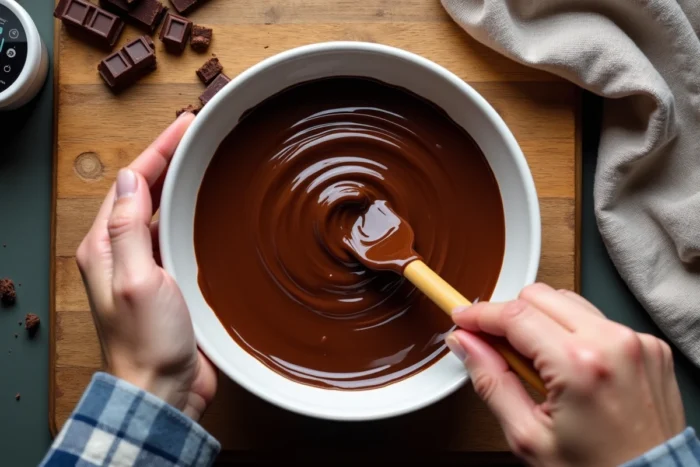
- First pour: one-third of the hot cream over the chopped chocolate. Mix in the center with a spatula or a rubber spatula, making small tight circles, until a thick and shiny paste forms in the center of the bowl.
- Second pour: add another third of the cream. Gradually widen the circular motion, always starting from the center. The mixture becomes more fluid but remains homogeneous.
- Third pour: the remaining cream. Mix until you achieve a smooth and satin-like texture, with no traces of unincorporated cream.
The emulsion builds from the center outwards, just like a mayonnaise. This concentric action prevents pockets of fat from forming. If you stir randomly, you incorporate air and break the nascent emulsion.
A hand blender gives excellent results for refining the emulsion at the end of mixing. Tilt it slightly and move it slowly through the ganache, without lifting it, to avoid trapping air bubbles.
Chocolate-cream proportions according to use: filling ganache, coating, or truffles
The ratio changes radically depending on what you want to do with the ganache. The same mixture cannot serve both as a flowing glaze and a firm filling.
- Coating ganache or glaze: equal proportions, meaning as much chocolate as cream (ratio 1:1). The texture remains flexible, coating, and easy to smooth over a cake.
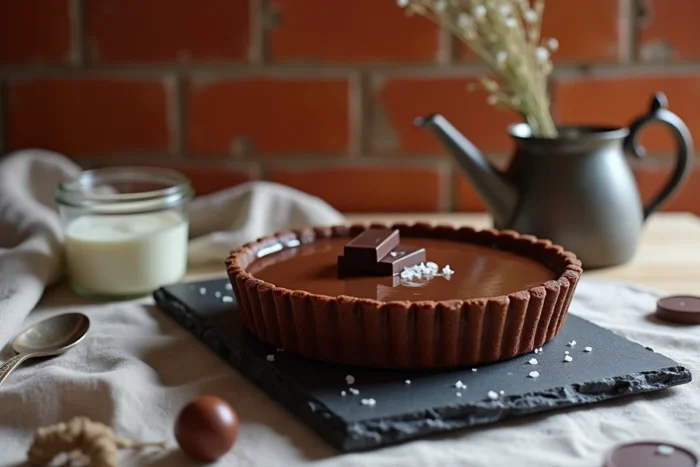
- Filling ganache for desserts: two parts dark chocolate to one part cream (ratio 2:1). It sets well when cold and holds between layers of cake without collapsing.
- Ganache for truffles: same 2:1 ratio, or even a bit more chocolate. Let it crystallize in the refrigerator before rolling.
- Whipped ganache: ratio close to 1:1 with the addition of one part cold, unheated cream. After resting in the cold, whip it like whipped cream.
White chocolate and milk chocolate require more chocolate than dark chocolate for the same firmness. Their cocoa butter content is different, and they contain sugar and milk solids that alter the setting. For milk chocolate, increase the chocolate proportion by about one-third compared to a dark chocolate recipe.
The role of butter in ganache
Adding a knob of butter at the end of mixing (when the ganache is around 35-40 °C) brings shine and additional creaminess. We’re talking about a modest amount, not a massive addition. The butter melts into the emulsion and gives that texture that clings to the palate without being heavy.
Cooling and storage: two steps often rushed
A well-emulsified ganache can still fail if the cooling is poorly managed. Covering the ganache directly before putting it in the refrigerator prevents the formation of a crust on the surface and a condensation film that would dilute the texture.
First, let the ganache cool to room temperature (about twenty minutes depending on the volume), then place it in the refrigerator. Moving it directly from hot to cold causes thermal shock that can split the emulsion or create sugar crystals on the surface.
For a filling ganache, a few hours of resting in the cold is sufficient. For truffles, aim for a full night. Whipped ganache, on the other hand, must rest for at least six hours before being whipped; otherwise, it won’t gain volume.
Keeping these guidelines in mind (fat content of the cream, controlled temperatures, concentric emulsion, ratio suited to the use, gradual cooling) is enough to achieve a consistent result. The equipment matters less than the rigor in these fundamentals.