The Parisian department stores are not shopping malls. They are buildings constructed since the Second Empire, designed from the outset to dramatize the act of shopping. Their architecture, organization by themes, and tailored services (personal shopping, tax refund, dining) make them hybrid places, halfway between commerce and cultural heritage. Understanding what distinguishes these brands from the rest of Parisian retail allows for a better experience during each visit.
The model of the Parisian department store: what sets it apart from classic retail
A department store operates on the principle of themed commerce under one roof. Unlike a shopping mall where each store manages its own space, the department store orchestrates the overall staging: circulation, lighting, merchandising, and services are designed as a continuous journey.
Boulevard Haussmann concentrates the two historical heavyweights, Galeries Lafayette and Printemps, but the landscape has evolved. La Samaritaine, closed for years, has reopened with an ultra-premium positioning that blends hospitality, dining, and fashion. Le Bon Marché, on the Left Bank, cultivates a more editorial identity, with sharp selections and a bookstore-grocery (La Grande Épicerie) that attracts as much attention as the fashion sections.
Those wishing to visit Harrods in Paris with Voyage 2 Rêve will find a direct parallel between the London model and its Parisian equivalents, where the stroll is as important as the purchase.
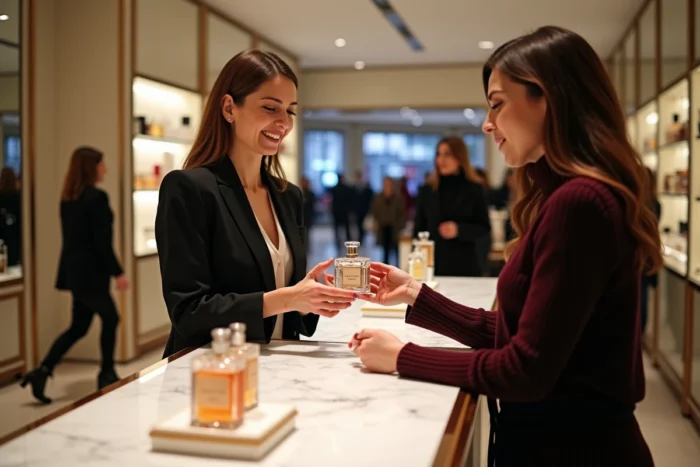
Haussmann architecture and interior staging of Galeries Lafayette and Printemps
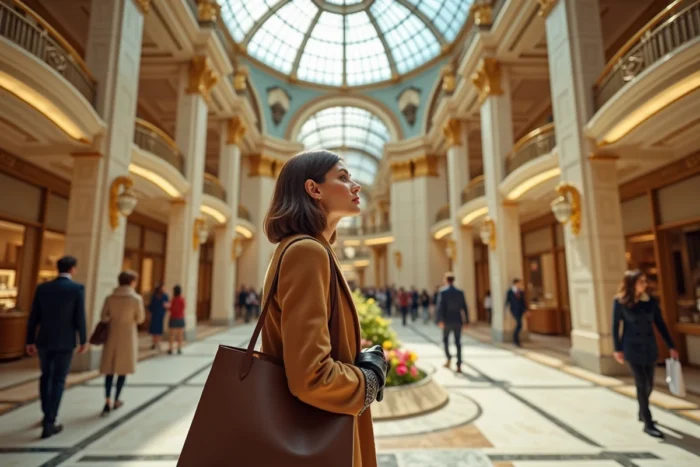
The dome of Galeries Lafayette Haussmann is probably the most photographed architectural element of Parisian shopping. This glass and steel dome, in neo-Byzantine style, transforms the central hall into a luminous cathedral. Printemps Haussmann also has classified skylights, less known but equally spectacular.
Architecture is not decorative; it is functional. The tiered interior balconies allow for a complete view of the offerings at a glance, creating a sense of aspiration towards the upper floors. This principle dates back to the very first department stores of the 19th century and remains effective today in guiding visitor circulation.
The rooftop terraces, accessible for free, offer panoramas of the Opéra Garnier and the rooftops of Paris. They have become destinations in their own right, with pop-up bars in the summer. Many visitors go straight to the top floor before even looking at the merchandise.
Tax refund shopping Paris: the concrete mechanism for non-European tourists
The tax refund (VAT refund) system is a real financial lever for non-resident visitors from the European Union. The principle: recover part of the VAT on purchases made in France, provided certain rules are followed.
- A minimum purchase amount per store and per day is required to trigger the refund. This threshold is set by regulation and verified at the checkout.
- The tax refund form must be validated electronically (via the PABLO system) at the airport or at the point of exit from the territory, before baggage check-in.
- Department stores have dedicated tax refund counters with multilingual staff, which significantly speeds up the process compared to independent boutiques where one must manage the form themselves.
This service structures the luxury shopping experience in Paris. For an international clientele, the tax refund can represent substantial savings, especially since department stores group enough brands to reach the threshold in a single visit.
BHV Marais: the strategic shift of 2026 and what it reveals about the market
BHV Marais illustrates a trend that classic tourist guides do not address. Its new general manager, Karl-Stéphane Cottendin, has announced the end of the luxury positioning and the return of 37 more generalist brands. The stated goal: “to rewrite a new story” for the store starting in the summer of 2026.
This decision contrasts with the premium race that has dominated the sector in recent years. It signals that luxury alone is no longer enough to guarantee foot traffic. An investigative article from Le Monde has described a significant drop in traffic in certain Parisian luxury boutiques, with salespeople now spending the day waiting for customers, whereas the situation was reversed before.
The landscape of Parisian department stores is reshaping. On one side, La Samaritaine and Le Bon Marché are reinforcing their high-end positioning. On the other, BHV is betting on accessibility. This divergence creates very different visitor profiles depending on the brands.
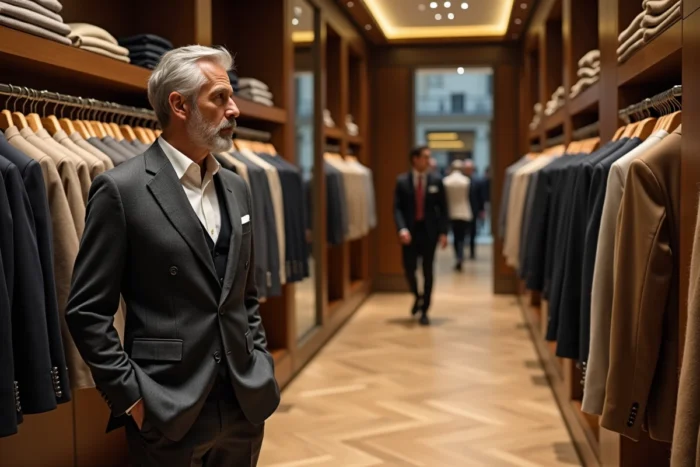
Personal shopping and tailored services: beyond the simple purchase
Parisian department stores have developed services that do not exist in online commerce or in most independent boutiques. Personal shopping is the most visible: a dedicated advisor prepares a selection of pieces in a fitting room, by appointment, based on the client’s budget and style.
- Galeries Lafayette offers a free personal shopper service, available by reservation, with advisors trained in trends and body types.
- Printemps has structured its offering around private spaces where clients can try on clothes without encountering the crowds on the floors.
- La Samaritaine integrates its shopping offer into an environment that blends hospitality (Cheval Blanc) and dining, creating an experience that far exceeds the commercial framework.
These services transform the visit into a personalized appointment. They partly explain why department stores are faring better than isolated boutiques in the face of the decline in foot traffic observed in the Paris luxury sector.
The Parisian department store remains a format without a true equivalent elsewhere in Europe. Its future depends less on the number of brands offered than on its ability to provide an experience that a screen cannot replicate: the dome, human advice, the rooftop terrace, the tax refund counter that simplifies life. It is this combination, and not the product catalog, that continues to attract visitors to boulevard Haussmann or the Left Bank.