The cultural news of this week in August 2026 can be read through three main themes: public budgets under pressure that are changing the programming of institutions, festivals embracing an ecological and participatory shift, and a reshaping of cultural practices through digital means. Here are the trends and cultural events to follow.
Cultural Budgets 2026: What Budget Cuts Mean for Live Performance
Competitors treat culture by categories (cinema, exhibitions, festivals). None start from the budgetary constraints that nonetheless condition all programming for the upcoming season. This is the most useful starting point to understand what is at stake this week.
According to Diapason, 2026 Culture subsidies have undergone a second reduction after an already partial first payment. This two-step cutting mechanism directly undermines live performance: theater companies, regional orchestras, and venues are seeing their cash flow cut during the peak season.
The concrete effect is not limited to cancellations. It manifests as reduced capacities, postponed co-productions, and an increased reliance on private sponsorship or ticket sales. For spectators, this means an offer that focuses on safe bets, at the expense of more risky creations. Those who wish to check the news on Bart Magazine will find regular updates on these budgetary decisions and their repercussions on programming.
August 2026 Festivals: Intimate Formats and Eco-Responsible Practices
The summer season confirms a movement that has been underway in recent years. Several sources converge: major events are refocusing towards more localized and mid-sized formats. The giant festival with an overwhelming program is giving way to events rooted in a territory, with a more distinct identity.
This refocusing is accompanied by an ecological aspect that now goes beyond mere communication. The reuse of stage materials, reduction of on-site waste, and limitation of artist travel are becoming integral production criteria. Evenement.com notes that these eco-responsible practices are becoming a standard in the industry rather than a marketing argument.
What Distinguishes August’s Programming
The Festival Paris l’Été 2026, mentioned by the DRAC Île-de-France, illustrates this trend by deploying its programming across an entire territory rather than a single site. The idea is to make the festival a network of venues rather than a central point.
- Mid-sized festivals attract an audience seeking a localized experience, away from the queues of large gatherings.
- Hybrid programming combines live performance, visual arts, and participatory workshops at the same site.
- Modular ticketing (day passes, family passes, reduced rates) is becoming widespread to compensate for the decline in public funding.
This phenomenon is not limited to metropolitan areas. Events in rural areas are gaining visibility, supported by local collectives that find in the short and targeted format an economic viability that large festivals struggle to maintain.
Art and Exhibitions in Paris: This Week’s Highlights
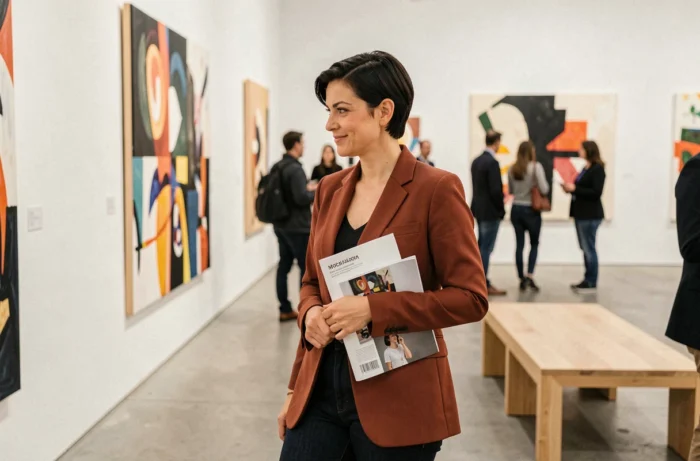
On the museum and exhibition front, Paris remains the gravitational center of the cultural week. The Rencontres d’Arles 2026, still ongoing, have been described by Le Figaro as an event placed “under the reign of metaculture,” a term that reflects the trend of photo exhibitions questioning their own display codes.
The major exhibitions not to miss in France in 2026, listed notably by ICART, cover a wide spectrum: contemporary art, heritage, and digital creations. The Palais de Tokyo and the Grand Palais are among the venues renewing their programming this week.
Digital as the Ordinary Framework for Visits
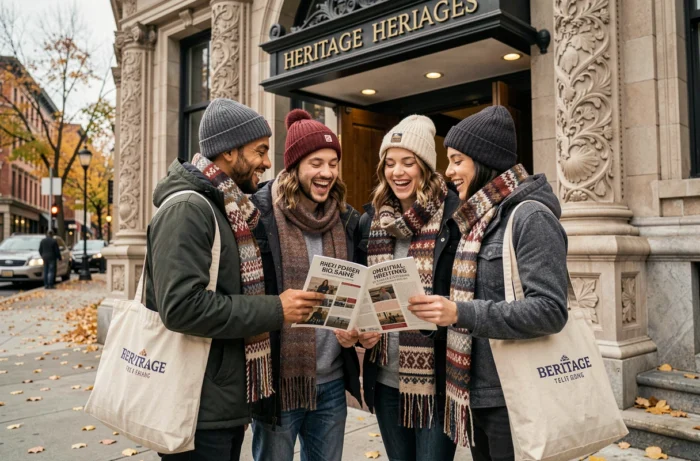
The Ministry of Culture highlights a structural shift: digital is now the usual environment for cultural practices. This does not mean that everything happens online, but that the preparation for a visit (selection, reservation, prior mediation) almost systematically goes through a screen.
For museums, this reality alters the relationship with the public. Digital mediation, augmented reality tours, and online catalogs do not replace the physical experience. They extend it and, at times, condition it: some high-attendance exhibitions are only accessible through online reservation, which excludes a part of the less connected audience.
Participatory Culture: When the Public Programs and Creates
The last structuring trend of 2026, identified by terraresponsable.com: participatory cultural projects are multiplying in urban, rural, and digital contexts. The public is no longer just a spectator; they co-program, co-create, or ensure mediation.
This dynamic responds to two simultaneous constraints. The first is budgetary: involving residents reduces production costs. The second is political: in the face of the perception of elitist or Parisian culture, the participatory format creates a direct link between a territory and its cultural offer.
- Collective writing workshops lead to public readings scheduled at local festivals.
- Neighborhood collectives become curators of exhibitions in repurposed wastelands.
- Digital platforms allow the public to vote for the works presented during outdoor cinema projection nights.
This model is not without limits. Artistic quality can suffer from a collective decision-making process, and the structural volunteering on which these projects rely remains fragile. Nevertheless, this trend deserves to be followed because it redefines what “programming” a cultural event means.
The cultural week of August 2026 thus unfolds at the intersection of real budgetary constraints, an ecological shift that is now structuring event production, and an audience that claims an active role. The exhibitions in Paris, the festivals in the regions, and the participatory projects outline a cultural map that is less centralized, more hybrid, and still in motion.