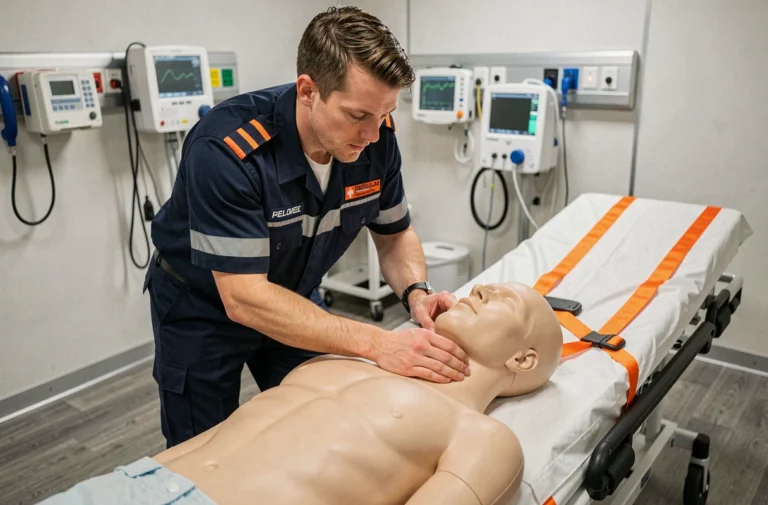
Skills development is no longer determined by the number of hours spent in a classroom. It relies on the ability of a program to precisely target what a professional lacks in order to progress. With the arrival of artificial intelligence tools capable of analyzing the gaps between acquired skills and expected skills, the professional training market in France has shifted towards a logic of personalized micro-pathways. The challenge now is to measure what this shift concretely changes for learners and companies.
Out-of-pocket CPF and access to personalized training: what the numbers show
Individual training financing has been profoundly modified since 2024. A fixed out-of-pocket charge now applies to each training funded through the Personal Training Account, regardless of the nature of the action.
| Period | Amount of CPF out-of-pocket charge |
|---|---|
| May 2024 (effective date) | 100 euros |
| January 2025-2026 (inflation indexing) | Progressive revaluation |
| April 2026 | 150 euros per training |
This participation is due for each new subscription, without distinction between a traditional training and a so-called innovative or personalized pathway. For an employee wishing to complete several micro-certifications within the year, the bill adds up.
At the same time, a Senate report estimated the regulations applied to the CPF at 949 million euros, indicating a strict budgetary framework. Access to individual training is tightening, which is pushing more and more professionals to seek co-financing from their company or to favor short pathways with high added value.
Among the catalogs that structure their offerings around modular pathways, the training offered on Kömal illustrates this trend towards programs targeted by skill rather than by hourly volume.

AI and skills matching: how personalization is changing corporate training
The personalization of training pathways is no longer limited to choosing between in-person and remote learning. Artificial intelligence tools identify the gaps between a learner’s profile and the skills required for their position or professional project. They then recommend specific modules, often short, rather than a long standardized curriculum.
This skills/needs matching mechanism changes the role of training managers in companies. They shift from an annual catalog logic to a dynamic management of pathways, continuously adjusted.
What this changes for teams
- Training time decreases because only relevant modules are offered, reducing the impact on operational activity
- Learners access content aligned with their actual gaps, not a generic program designed for the masses
- Managers have more refined progress indicators, linked to measurable skills rather than module completion rates
This approach requires an initial investment in analyzing job reference frameworks. Without a precise mapping of expected skills, the algorithm has nothing to compare. The companies that make the best use of these tools are those that have already formalized their job descriptions and evaluation grids.
Online training, blended learning, and augmented reality: what formats for what results
E-learning now represents a structural part of the professional training market. However, not all digital formats produce the same results depending on the type of skill targeted.
| Format | Type of skill suited | Main limitation |
|---|---|---|
| Asynchronous e-learning | Theoretical, regulatory knowledge | Low engagement over time |
| Blended learning (hybrid) | Technical skills with practical application | Heavier logistics to organize |
| Augmented/immersive reality | Professional gestures, safety, field simulation | Cost of equipment and development |
| Micro-learning (short modules) | Regular updates, industry monitoring | Insufficient for complex learning |
The hybrid format combines the best of remote and in-person, provided that the connection between the two is planned in advance. An online module followed by a day of practical application supervised by experts generally produces better results than a 100% digital pathway for operational skills.
Augmented reality, used for example in fire safety training, allows for the simulation of risky situations without exposing learners. This type of device remains costly to develop, which currently limits it to large organizations or specialized agencies.

Criteria for choosing high-value training
In the face of the proliferation of offers, distinguishing a truly personalized training from a standardized program dressed in promises requires some concrete checks.
- An initial skills diagnosis must precede enrollment. Without prior evaluation, personalization remains a marketing argument
- The program must specify the measurable skills targeted at the end of each module, not just general objectives
- The presence of human support (tutor, mentor, industry expert) in addition to digital tools differentiates effective pathways from passive content platforms
- Financing modalities must be transparent, incorporating the CPF out-of-pocket charge and any employer or OPCO contributions
A training that does not measure outcomes cannot prove its effectiveness. Recognized certifications and micro-certifications constitute a reliable indicator, provided their registration in the national directory is verified.
The professional training market is structuring around shorter, more targeted pathways backed by skills analysis tools. The CPF out-of-pocket charge raised to 150 euros since April 2026 reinforces the need to choose programs whose added value is demonstrable. The key data remains the transfer rate in the workplace, the only indicator that links training to a concrete professional outcome.