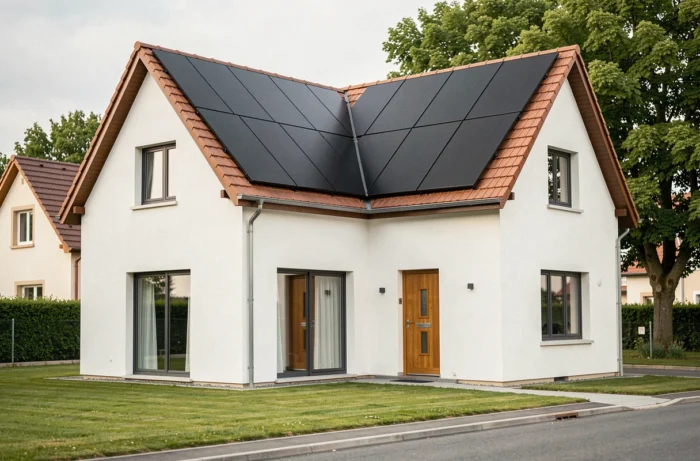
The value of a real estate property partly depends on its energy performance, measured by the Energy Performance Diagnosis (DPE). The installation of photovoltaic solar panels directly modifies this performance by reducing the energy consumption drawn from the grid. With recent regulatory changes regarding the calculation of the DPE, the solar energy produced on-site now weighs more heavily in the evaluation of a property.
Electricity conversion coefficient: the regulatory lever that changes the game
Before discussing panels or added value, it is essential to understand a technical mechanism that most articles on the subject overlook. The DPE uses a electricity conversion coefficient to translate final consumption into primary energy. This coefficient determines the rating assigned to the property.
This coefficient has changed from 2.3 to 1.9 as of January 1, 2026, and will drop to 1.7 on January 1, 2027. In practice, a property heated by electricity sees its primary consumption calculated decrease without any work being done.
According to the Ministry of Economy, this change has removed approximately 850,000 homes from the status of energy sieves (classes F and G) out of 4.8 million recorded. For a property already equipped with self-consumption solar panels, the effect is twofold: grid consumption decreases thanks to solar energy, and the coefficient further reduces the conversion to primary energy.
This is a point to remember if you are considering a photovoltaic project with a view to resale: the improvement in the DPE will be more pronounced than it would have been a few years earlier. Potential buyers comparing listings see a better energy label, making the sale easier and justifying a higher price. To discover energiesolaires fr, resources detail the interactions between solar energy and property valuation.

European DPE 2027: solar production displayed in black and white
The decree of June 11, 2026, applicable from January 1, 2027, mandates a revamp of the DPE presentation. The production of renewable energy on-site must be detailed in the diagnosis: quantity produced in kWh, breakdown by source, and share of this production in the final consumption of the property.
Until now, a buyer saw an overall label without knowing precisely where the performance came from. With the new format, the contribution of photovoltaic panels becomes readable in listings and diagnostics.
This change has a direct consequence on negotiation. A buyer who hesitates between two properties rated B can now compare the share of solar energy produced by each. The property equipped with a photovoltaic installation documented in the DPE has a measurable argument, not just a promise of savings.
What this changes for a seller
The seller of an equipped property has every interest in having a new DPE done after January 1, 2027, rather than keeping an earlier diagnosis. The old format does not value solar production with the same level of detail. A DPE redone in the new format makes visible every kWh produced by the installation, which enhances the perceived value of the property.
Solar self-consumption and green value: how the real estate market reacts
The green value refers, according to ADEME, to the additional value a property gains due to its environmental performance. Homes rated A or B sell for significantly more than equivalent properties rated D, all else being equal.
Photovoltaic self-consumption contributes to this green value in two ways:
- It reduces the monthly energy costs of the property, attracting buyers sensitive to the long-term usage cost of the property.
- It improves the energy label of the DPE, especially since the drop in the conversion coefficient reduces the share of grid electricity in the energy balance.
- It generates, in some cases, an additional income by selling surplus production back to the grid, which constitutes an additional financial argument during the sale.
The attractiveness of a solar property also depends on the quality of the installation. A recent, well-sized installation covered by a ten-year warranty reassures a buyer. Conversely, aging or poorly installed panels can become a hindrance.
Technical precautions before selling a property equipped with solar panels
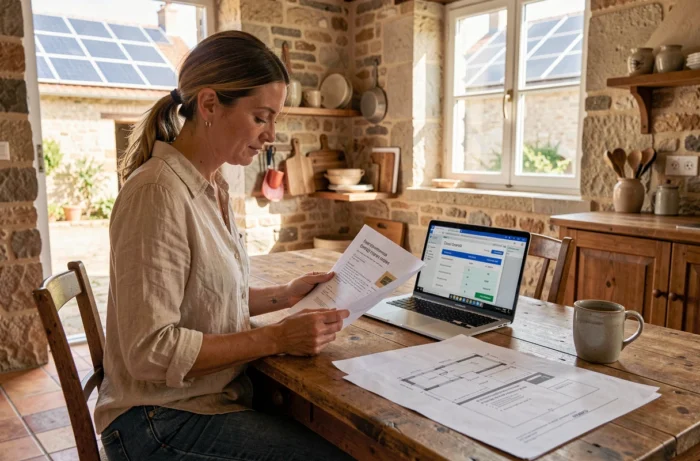
The photovoltaic installation is part of the real estate property being sold. The seller must be able to provide several documents that reassure the buyer and secure the transaction.
- The Consuel compliance certificate, which certifies that the electrical installation meets current standards.
- The connection contract with the network manager, as well as the purchase obligation contract if the surplus is sold.
- The ten-year warranty of the installer, which covers damages related to the installation for ten years after commissioning.
- Invoices and maintenance log, which allow the buyer to assess the actual condition of the panels and the inverter.
An incomplete file weakens the negotiation. If the installer has ceased operations or if the ten-year warranty is not transferable, the buyer may demand a discount. Checking these elements before putting the property up for sale avoids unpleasant surprises at the time of the compromise.
Inverter and residual lifespan
The inverter, which converts the direct current from the panels into alternating current, has a shorter lifespan than the panels themselves. If the inverter is nearing the end of its life at the time of sale, the replacement cost can weigh in the negotiation. Anticipating this replacement or adjusting the price accordingly helps maintain the credibility of the solar argument.
Solar energy is not just a marketing argument for selling real estate. The regulatory changes of 2026 and 2027, by making photovoltaic production more visible in the DPE and altering the electricity conversion coefficient, transform a well-maintained installation into a measurable and verifiable advantage for any buyer.